
Introduction
In today’s world, more than 80 percent of the data we generate has a spatial element.
From banking transactions to urban traffic, population distribution, user behavior, neighborhood economic dynamics, and even patterns of environmental change—all make sense on a map.
This is where spatial intelligence comes in: a tool for understanding “what happens where and why.”
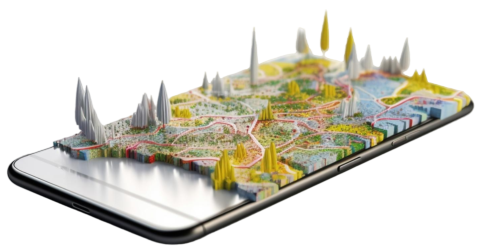
What is spatial intelligence?
Spatial intelligence is a set of methods, models, data, and tools that help us:
See hidden patterns in spatial data
Discover spatial trends
Predict risks
Analyze user and market behavior based on location
And make decisions that are rooted in geographic reality
Spatial intelligence is a combination of GIS, spatial data, artificial intelligence, statistics, economics, urban planning, and big data processing.

Why are the biggest brands investing in spatial intelligence today?
Chain stores: neighborhood purchasing power analysis
Municipalities: traffic management, crisis and urban development
Platforms: user behavior analysis, high-density locations and optimal routes
Intelligent transportation: traffic tracking, optimization and prediction
Spatial intelligence reduces costs, increases profits and improves service quality.
Zenit; a native spatial intelligence platform in Iran
By providing native data, accurate base maps and advanced analysis tools, Zenit enables businesses and organizations to use spatial intelligence; without the need for specialized teams or complex infrastructure.
Conclusion
Spatial intelligence is not a trend; it is the future of decision-making.
Organizations that use it today will be intelligent market leaders tomorrow.